Free Shipping for Purchases over $99. Restrictions Apply.

Welcome to our store. Learn more

Non Stick Cookware

(20 products)
View as

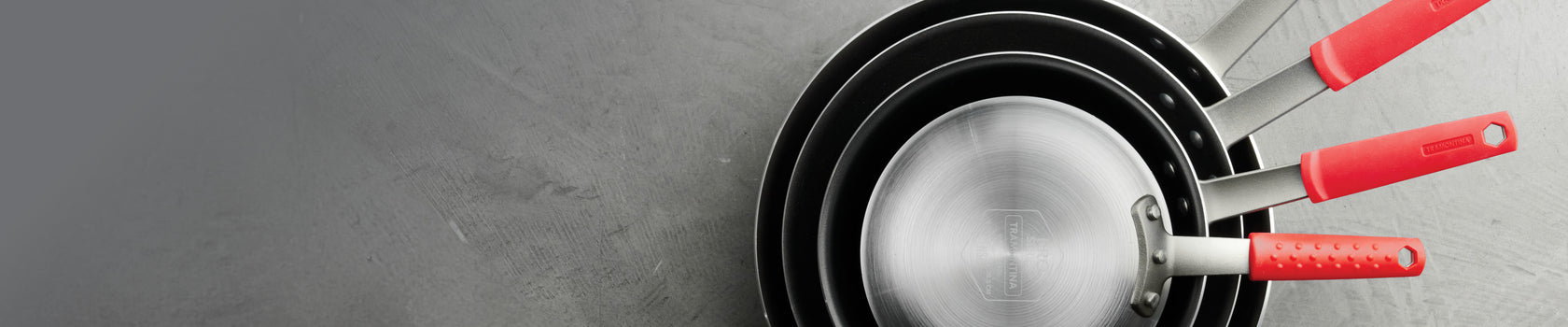
Non Stick Cookware for Easy Release Across Every Pot and Pan

Non stick cookware takes the friction out of everyday cooking, releasing eggs, fish, and stir-fries cleanly and wiping down in seconds once the meal is done. Tramontina non stick cookware spans full sets, fry pans, sauce pans, and pots, in traditional nonstick, ceramic, and hard anodized surfaces over responsive aluminum and stainless steel bases. Whether you are outfitting a whole kitchen at once or filling a gap in your lineup, there is a piece sized for the job.

This collection covers non stick cookware for the whole kitchen, including:

Behind every piece of non stick cookware is a focus on easy release, even heat, and lasting build, and developed with:

  • Aluminum and stainless steel bases that spread heat evenly so food cooks without hot spots
  • Traditional nonstick, ceramic, and hard anodized interiors to match how you like to cook and clean
  • Coordinated sets that outfit a kitchen at once, plus open stock to fill in a single piece
  • Nesting designs on select sets that stack down to free up cabinet space
  • Compatibility with gas, electric, and ceramic glass cooktops, with induction-ready options available

Build your kitchen one reliable piece at a time or start with a full set, and you have non stick cookware that releases cleanly, cleans up fast, and earns a place on the stove every day.

Your Non Stick Cookware Questions Answered

What is non stick cookware?

Non stick cookware is any pot or pan finished with a release coating so food lifts away without sticking. The coating sits over a heat-conducting base, usually aluminum or stainless steel. It spans fry pans, sauce pans, saute pans, stockpots, and full sets, and is prized for cooking delicate foods with less oil and for fast cleanup.

What is the best non stick cookware set?

The best set is the one that matches how you cook. Look for an even-heating aluminum or stainless base, a durable coating, comfortable handles, and the specific pieces you actually use. A nesting set saves cabinet space, while a larger collection lets you add pieces over time. Tramontina offers everything from compact nesting sets to full-kitchen collections.

What is the difference between traditional, ceramic, and hard anodized non stick?

Traditional nonstick uses a PTFE-based coating known for long-lasting slickness. Ceramic nonstick uses a coating made without intentionally added PTFE, PFOA, PFAS, lead, and cadmium, which appeals to cooks who prefer to avoid synthetic coatings. Hard anodized describes the base rather than the coating: aluminum hardened electrochemically for scratch resistance, with a nonstick surface applied over it.

How many pieces of cookware do I actually need?

Most home cooks are well covered by a fry pan or two, a couple of sauce pans, and a stockpot. A 9 to 11 piece set usually includes those essentials plus lids. If you cook for a family or entertain often, a larger set or a few open-stock additions fill the gaps. Buy for the meals you actually make rather than the piece count on the box.

Is non stick cookware safe?

Yes, when used as directed. Modern coatings are stable at normal cooking temperatures and do not release harmful fumes at low to medium heat. Avoid heating an empty pan on high, and retire any piece with a scratched, chipped, or flaking surface. Tramontina offers both traditional and ceramic nonstick, so you can choose the surface you are comfortable with.

Can non stick cookware go in the oven and the dishwasher?

Many pieces are oven safe up to a stated temperature, so check the limit for each item. Pieces with stainless steel handles generally handle the oven well, while silicone grips should come off unless they are rated for oven use. Much nonstick cookware is dishwasher safe, but hand washing with a soft sponge preserves the coating longer.

What utensils and heat should I use with non stick cookware?

Stick to low and medium heat, since the conductive base does not need high heat and excess heat shortens the life of the coating. Use silicone, wood, or nylon tools to protect the surface, and skip metal utensils and abrasive pads unless a piece is rated metal-utensil safe. Add oil or butter after a short preheat for the cleanest release.

Is non stick cookware or stainless steel better?

They do different jobs well. Non stick cookware shines for eggs, fish, pancakes, and low-fat cooking with easy cleanup, while stainless steel is better for high-heat searing and building fond for pan sauces. Many kitchens keep both. Tramontina's stainless steel fry pan with a nonstick interior pairs the two materials in a single pan.

{"statementLink":"","footerHtml":"","hideMobile":false,"hideTrigger":false,"disableBgProcess":false,"language":"en","position":"right","leadColor":"#146ff8","triggerColor":"#146ff8","triggerRadius":"50%","triggerPositionX":"right","triggerPositionY":"bottom","triggerIcon":"people","triggerSize":"medium","triggerOffsetX":90,"triggerOffsetY":20,"mobile":{"triggerSize":"small","triggerPositionX":"right","triggerPositionY":"bottom","triggerOffsetX":35,"triggerOffsetY":90,"triggerRadius":"50%"}}